Sunday, April 10, 2011

Kyoto the Trip! Part 7 - Ohara and the Wrath of Mount Hiei

On the third day of our Kyoto trip, we decided to follow a suggestion in the Lonely Planet guide that we do a combined day trip to Ohara and Mount Hiei, north of Kyoto. Ohara is a little farming town in the mountains that is home to Sanzenin, a pleasant mountain temple. Mount Hiei is home to a temple complex, Enryakuji, that is quite famous. I've been interested in the place for a while, it figures prominently in a lot of Japanese stories from the middle ages, mainly because the temple had an army of warrior monks that used to terrorize Kyoto in the Heian era. Oda Nobunaga in the 16th century had the whole mountain razed and all the monks executed, after which it was rebuilt on a more modest scale.

Both Ohara and Mount Hiei are on the #17 bus route from Kyoto station, so they can, as the Lonely Planet guide suggests, both be visited on the same day. The guide does, however, neglect to mention one important piece of information that totally blew our plans to pieces, as I'll explain below.

First, we were off to Ohara, a sleepy mountain village populated with sleepy mountain villagers as we quickly discovered:
We had lunch at a little restaurant next to the bus stop. For reasons that are unknown to me, the decor reminded me of my grandparent's old farmhouse in Quebec:
Maybe the wood paneling. I don't know. Quaint little place though.

It is about a 10 minute walk from the bus stop to the temple. The route leads you up a little mountain road lined with souvenir shops and places selling local food to tourists:
As a side note, I have to add that I love these little lanes lined with souvenir shops that have cropped up in front of most major tourist attractions here. The guide books always criticize them for being "touristy", but that is really where their brilliance lies. I think I mainly like them simply because they remind me of being on vacation. They evoke memories of all the fun places I've been to over the years while taking trips like this. I get the same feeling around train stations and airports - that feeling that I associate with holidays and travel.

Anyway, back to Ohara. The shops continue up to the temple, whose walls look like those of a castle:
Sanzenin is well know for its beautiful garden:
And its nice temple buildings set in well-kept forests of cypress trees:

A lot of the cute Buddhist statues I included in my previous post were at this temple.

After finishing with the Sanzenin at about 2PM we decided to head back down to the bus stop to catch the next ride to Mt. Hiei.
We caught the 2:20 bus and arrived at Mt. Hiei about fifteen minutes later.

In order to reach the top of the Mountain, you have to take a cable car and a ropeway. The bus lets you off at the Cable car station:
If you look closely in the above photo you can just see the cable car leaving up the mountain, we had just missed the 2:35 departure.

So we went, bought our ticket from the vending machine and began to wait for the next one. While sitting there, an employee politely notified us that the 2:35 cable car was the last one that we could take.

This is the key piece of information that the Lonely Planet had neglected to inform us of, and which I want to impart to everyone out there considering a similar trip. If you are going to combine a trip to Ohara and Mount Hiei, make sure you visit Mount Hiei first and Ohara second. Otherwise you'll be screwed like we were. Ignore the fact that the bus schedule says you have until 7PM, according to the station staff you really need to arrive at Mount Hiei in the morning and not after noon to see the place.

The plus side was that we only lost about 20 minutes due to this detour as we were able to hop on the next bus into town and enjoy the rest of the day exploring central Kyoto. The downside though is that I still haven't seen Mt. Hiei, except for the cable car station!

Our Kyoto trip continues in the next post.


Related Posts:
- Kyoto the Trip! Part 1 - Tofukuji and Sanjusangendo
- Kyoto the Trip! Part 2 - Kiyomizu Temple and Maruyama Koen
- Kyoto the Trip! Part 3 - Ryoanji and Ninnaji
- Kyoto the Trip! Part 4 - Shopping Arcades by Night
- Kyoto the Trip! Part 5 - Antiquing Kyoto Style
- Kyoto the Trip! Part 6 - Cute Buddhist Statues
- Kyoto the Trip! Part 7 - Ohara and the Wrath of Mount Hiei

Saturday, April 9, 2011

Kyoto the Trip! Part 6 - Cute Buddhist Statues

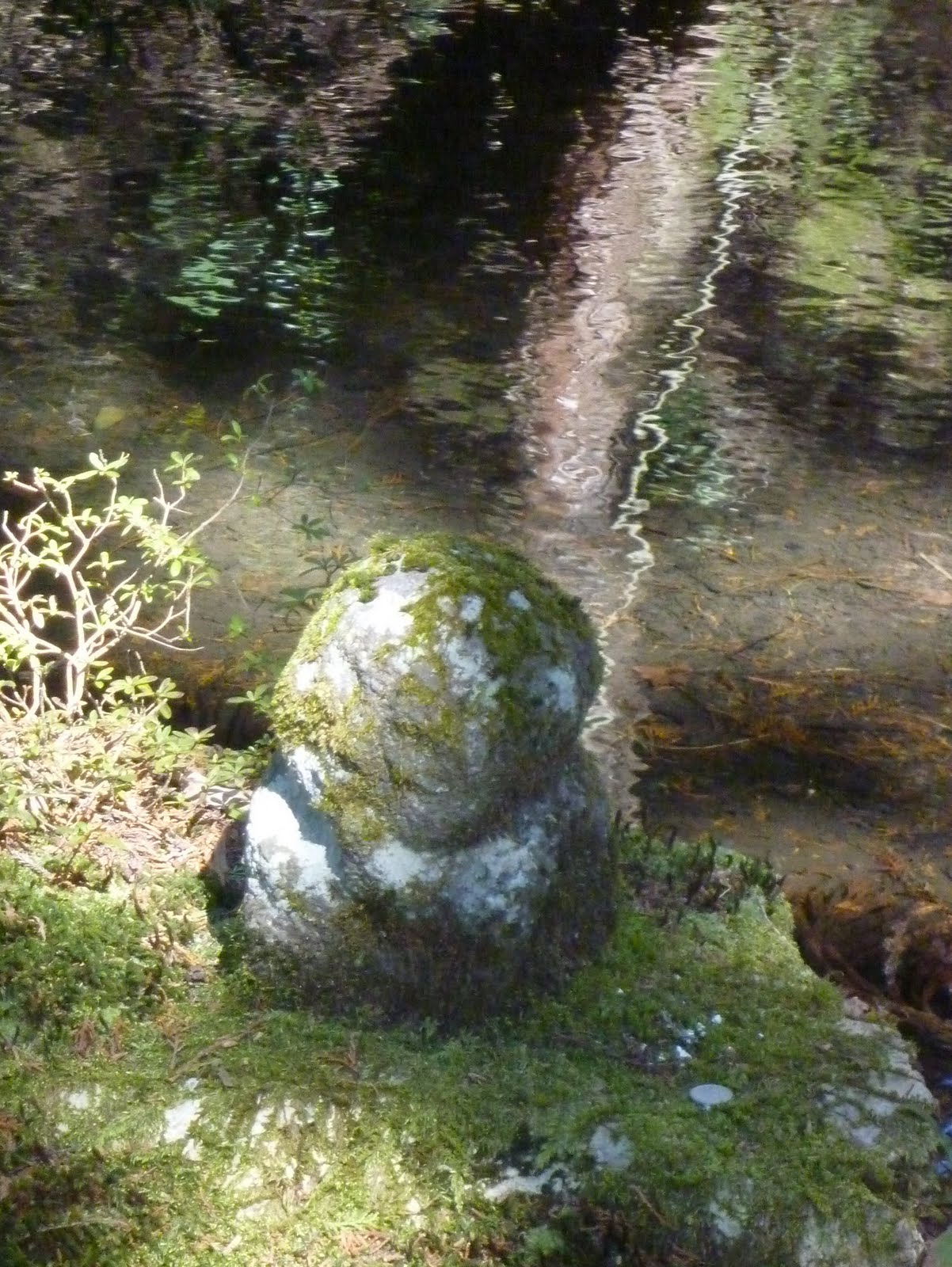
I could almost see myself converting to Buddhism just for the cute statues. Well, most of them are fierce like this guy at the gate of Ninnaji:
But gardens tend to be littered with cute ones here and there, like this one from Tofukuji:
And these ones from Sanzenin in Ohara:
These ones are actually from Fukuoka, on the roof of the new Hakata Station, which has a Shinto shrine dedicated to the railway. I took the photo up there while we were waiting for our bus to Kyoto:
Our Kyoto trip continues in the next post.

Related Posts:
- Kyoto the Trip! Part 1 - Tofukuji and Sanjusangendo
- Kyoto the Trip! Part 2 - Kiyomizu Temple and Maruyama Koen
- Kyoto the Trip! Part 3 - Ryoanji and Ninnaji
- Kyoto the Trip! Part 4 - Shopping Arcades by Night
- Kyoto the Trip! Part 5 - Antiquing Kyoto Style
- Kyoto the Trip! Part 7 - Ohara and the Wrath of Mount Hiei
- Kyoto the Trip! Part 8 - Kyoto Station vs. Kyoto Tower

Kyoto the Trip! Part 5 - Antiquing Kyoto Style

While we were wandering through the shopping arcades of Kyoto on the second night, we came across a shop window full of antique books and woodblock prints. This isn’t the sort of thing that excites most people, but I quite like old books – especially old Japanese books – and woodblock prints. I have a small collection of them stored somewhere in my parent’s garage back in Canada that I accumulated during my previous stay in Japan.

I really like woodblock prints. They are colorful and geared towards the masses of the time rather than wealthy art collectors. They were a source of inspiration for European impressionist painters in the 19th century, ironically at a time when they were completely going out of fashion in Japan. I never pass up a chance to look at a store that has some, though they are a hard commodity to find in Fukuoka.

So into the store we ventured.The shop was called Daishodo, located in the Teramachi shopping arcade. For an old-book lover like myself, it is an amazing place. Wall to wall books and prints meticulously decorating every square inch of the cozy 2 floor shop. The store proprietor – a congenial looking man his 50s (I guess) - sat at his little desk reading, oblivious to the presence of the customers who had just walked in.

Score one for Daishodo.

We (OK, more I) spent about an hour poring over the selection. Usually old book stores in Japan are about 95% crap and 5% good stuff (if that), but not Daishodo. Everything in the store was good stuff, all of it carefully labeled with the artist’s name and date and organized in a very pleasing way.It was intimidating as a lot of the good stuff had prices running into the thousands of dollars on them. Happily though they had a wide range of choices for even the (ahem) more economically conscious woodblock print collectors among us. And so I walked out of the store with some new possessions in tow and a lighter wallet in my pocket. Here is what I got:

Toyokuni the Third (1852)

Hirosada (1861)

Yoshiiku (1867)

Kunichika (1882)

(?) (1897)

Unknown (1771)

I was pretty happy with the haul. For 400 yen each they also had some of these:

I think these were just pictures they cut out of an old book (the date said 1771). They are actually a pretty cool and cheap piece of home decor though. They fit perfectly into 100 yen shop picture frames (which is what it is in). I picked up four of the nicer pictures and, together with the frames, the whole set only cost about 20 bucks:So next time you are in Kyoto and you happen to be a woodblock print or antique book lover, head over to Daishodo.

More pictures and stories of our Kyoto holiday in the next post.


Related Posts:
- Kyoto the Trip! Part 1 - Tofukuji and Sanjusangendo
- Kyoto the Trip! Part 2 - Kiyomizu Temple and Maruyama Koen
- Kyoto the Trip! Part 3 - Ryoanji and Ninnaji
- Kyoto the Trip! Part 4 - Shopping Arcades by Night
- Kyoto the Trip! Part 6 - Cute Buddhist Statues
- Kyoto the Trip! Part 7 - Ohara and the Wrath of Mount Hiei
- Kyoto the Trip! Part 8 - Kyoto Station vs. Kyoto Tower

Thursday, April 7, 2011

Kyoto the Trip! Part 4 - Shopping Arcades by Night

After spending the afternoon of our second day visiting temples, we headed back into central Kyoto to experience some of the city life.

One nice thing about Kyoto is that if you get tired of looking at the historical stuff, the downtown area has a bustling and vibrant feel to it. In the Kawaramachi area between Shijo and Sanjo where our hotel was located there are numerous arcades packed with interesting shops and interesting shoppers. We headed down into these in search of dinner and whatever else they had.
I love shopping arcades. Its a bit hard to convey the experience of walking through one in words or even pictures, so I made a 3 minute video of walking through the crowded and lively Nishiki Koji Dori arcade that you can watch here.

As you can see from the video, these arcades are a million times more interesting than the bland shopping malls that, regrettably, have been popping up all over the place here in the past decade or two. It is one of the things I'm kind of disappointed with Fukuoka about. We've only got one shopping arcade that is really busy -Shintencho - and it isn't particularly big. The other ones (like the one in Nakasu leading to Canal City) have a kind of dead feel to them.

Kyoto's shopping arcades though are brilliant. They stretch on in all directions for as far as the eye can see, packed with shoppers all the way. They have tons of independent little shops. Some good, some not so good, but all interesting. They barely get a passing mention in most guide books (if that) but I think they are one of the best attractions which Kyoto has to offer.

Bizarre features are not in short supply. Like airplanes being used as facades atop entrance ways:
Giant burritos, or Om-rices or whatever this is:
And mechanical crabs overlooking gift shops:
Some of the shops look quite old:
While others have a refreshingly "shiny" feel to them:
There are a number of tiny temples facing onto the shopping arcades here and there:
Enter their gates and you are transported in mere seconds from the hustle and bustle of the bright shopping arcade:
To the lonely and eerily quiet sight of an urban graveyard only metres away:
We ended up having dinner in a Yakitori restaurant that night. It was quite good, though I didn't take any pictures and can't remember the name of the place. Much merriment was had though. We actually spent quite a bit of time over the following couple of days wandering around the area.

Continued in the next post.

Related Posts:
- Kyoto the Trip! Part 1 - Tofukuji and Sanjusangendo
- Kyoto the Trip! Part 2 - Kiyomizu Temple and Maruyama Koen
- Kyoto the Trip! Part 3 - Ryoanji and Ninnaji
- Kyoto the Trip! Part 5 - Antiquing Kyoto Style
- Kyoto the Trip! Part 6 - Cute Buddhist Statues
- Kyoto the Trip! Part 7 - Ohara and the Wrath of Mount Hiei
- Kyoto the Trip! Part 8 - Kyoto Station vs. Kyoto Tower

Wednesday, April 6, 2011

Kyoto the Trip! Part 3 - Ryoanji and Ninnaji

The second day of our trip saw us hitting a couple more UNESCO world heritage sites in the afternoon - Ryoanji and Ninnaji.

First we hit Ryoanji. Its a spacious temple in the northwestern part of the city, not far from the more famous Kinkakuji (which we skipped this time around). Some of the cherry trees were in bloom in the gardens:
Ryoanji is most famous for its Zen rock garden:
Created in the Muromachi period by the monk Tokuho Zenketsu (I've got the brochure in my lap as I type this), its a pleasant place to sit and relax for a few minutes, assuming it isn't besieged by crowds when you go.

The temple also has a large, regular garden that features a surprisingly large pond:
We tried some tea near the gate:
After leaving Ryoanji we headed over to Ninnaji, which is nearby. Though not quite as famous as Ryoanji, I really enjoyed Ninnaji and would rank it as one of the better places to visit in Kyoto.
Its a bit different from most temples because it also served as an imperial residence at one point in the distant past and thus has a lot of palace architecture in addition to the usual temple buildings.

The main gate is guarded by some fierce looking deities on the right:
And the left:
After entering the main gate, on the left is the entrance to the old imperial palace:
This is the best part of Ninnaji, though apparently it is only open to the public at certain times of the year, so check ahead.

The insides feature winding external corridors that take you through some quite pleasant gardens:

The garden features what I think must be the best use of borrowed scenery I've ever seen in a garden, the top of the five story pagoda in the neighboring temple grounds:
The interiors of the palace buildings featured impressive paintings:
We sat outside and rested our feet next to one of the rock gardens:
While the roofs of adjacent buildings shaded the gardens beneath from the afternoon sun:
After enjoying the palace we headed over to the temple part of Ninnaji, which features a five story pagoda (my favorite kind of pagoda):
There are several temples in Kyoto that have five story pagodas (I know Daigoji and Toji have them as well) but Ninnaji was the only one we saw on this visit:
After that we headed to the gate:
And began making our way back towards central Kyoto, for our first real night on the town in the big city, which will be the subject of the next post.

Related Posts:
- Kyoto the Trip! Part 1 - Tofukuji and Sanjusangendo
- Kyoto the Trip! Part 2 - Kiyomizu Temple and Maruyama Koen
- Kyoto the Trip! Part 4 - Shopping Arcades by Night
- Kyoto the Trip! Part 5 - Antiquing Kyoto Style
- Kyoto the Trip! Part 6 - Cute Buddhist Statues
- Kyoto the Trip! Part 7 - Ohara and the Wrath of Mount Hiei
- Kyoto the Trip! Part 8 - Kyoto Station vs. Kyoto Tower