Friday, April 15, 2011

Kyoto the Trip! Part 11 - Yasaka Jinja by Night

On our third night we walked over from the hotel to Yasaka Jinja in the Gion area. Its an interesting place at night, overlooking the bustle of Gion:
The gate is bright orange and white:
Large stones make for an attractive path to the centre of the Shrine. The lanterns bring it to life after dark::
Nearby in Maruyama Koen the spring splendor of the giant weeping cherry tree is fully lit:
On the street in front of the shrine we spot a Maiko san heading off to an evening appointment and looking somewhat out of place in the modern surroundings:
Around the corner though is the Gion district's main entertainment district for the well to do, a fitting destination for her:After watching her duck discreetly into a doorway, we headed back to our hotel and called it a night.Continued in the next post.

Related Posts:
- Kyoto the Trip! Part 1 - Tofukuji and Sanjusangendo
- Kyoto the Trip! Part 2 - Kiyomizu Temple and Maruyama Koen
- Kyoto the Trip! Part 3 - Ryoanji and Ninnaji
- Kyoto the Trip! Part 4 - Shopping Arcades by Night
- Kyoto the Trip! Part 5 - Antiquing Kyoto Style
- Kyoto the Trip! Part 6 - Cute Buddhist Statues
- Kyoto the Trip! Part 7 - Ohara and the Wrath of Mount Hiei
- Kyoto the Trip! Part 8 - Kyoto Station vs. Kyoto Tower
- Kyoto the Trip! Part 9 - Japanese Tourism and the Earthquake
- Kyoto the Trip! Part 10 - Kamogawa and Pontocho

Tuesday, April 12, 2011

Kyoto the Trip! Part 10 - Kamogawa and Pontocho

The Kamogawa is a nice river that runs north-south through central Kyoto. Along the banks the city has created an excellent cycling/pedestrian path that provides a great, tree-lined way of traversing the city by bicycle.

On the west bank of the river as you near central Kyoto you notice a long line of multi-story, older looking buildings facing the river:This is the Pontocho area, an alley running next to the river which houses many of the most exclusive entertainment establishments in town. At night they light up and you can see the goings on within from a bridge crossing the river:
These places are way more than our budget would allow for, so we didn't venture in. If you venture a further block away from the river though you'll find one of the better cherry blossom viewing places in Kyoto along a small canal that runs parallel to Pontocho:
Some of the shops are interesting, like this one with a giant lantern (called "red mustache", note the illustration on the top):
There are some quirky shops and restaurants along this street which are much less upscale than the ones on neighboring Pontocho.
For reasons which are not entirely clear to me, a lot of Kyoto's pornography stores also line this street, a fact that we found amusing as the tourist brochures carefully crop them out of the photos.

Kyoto's Kabuki theatre is also nearby, albeit on the opposite bank of the Kamo river:
Its got a bit of class to it, though unless you are planning on seeing a Kabuki play I wouldn't recommend tracking it down just for the sake of seeing the building.

To be continued...

Related Posts:
- Kyoto the Trip! Part 1 - Tofukuji and Sanjusangendo
- Kyoto the Trip! Part 2 - Kiyomizu Temple and Maruyama Koen
- Kyoto the Trip! Part 3 - Ryoanji and Ninnaji
- Kyoto the Trip! Part 4 - Shopping Arcades by Night
- Kyoto the Trip! Part 5 - Antiquing Kyoto Style
- Kyoto the Trip! Part 6 - Cute Buddhist Statues
- Kyoto the Trip! Part 7 - Ohara and the Wrath of Mount Hiei
- Kyoto the Trip! Part 8 - Kyoto Station vs. Kyoto Tower
- Kyoto the Trip! Part 9 - Japanese Tourism and the Earthquake

Monday, April 11, 2011

Kyoto the Trip! Part 9 - Japanese Tourism and the Earthquake

Today marks exactly one month since the Tohoku earthquake devastated northeastern Japan. One of the side effects of the tsunami that has affected the country as a whole has been its effects on the tourism industry. The Japan Times reported last week that the number of foreign visitors to Japan arriving via Narita airport, Japan's largest, was down 75% in the period from the earthquake through to the end of March. Another article further suggests that domestic tourism is down as well.

We planned our Kyoto trip in late February, before the quake hit. At the time it looked like Kyoto would be bursting to the seams with tourists. We couldn't even book a hotel for all three days as every hotel in the city (except for some exclusive ryokan charging way more than we could afford) was booked for the first day. We ended up having to stay our first night in a business hotel in Shin-Osaka. The other two nights we spent at the Kyoto Central Inn (which is a good place to stay, location wise at least).
After the quake struck, we weren't sure if we should still go on the trip. Kyoto is closer to, but still quite far from, the disaster area. More than that though, it just seemed unfair for us to be doing something enjoyable at a time when so many people are undergoing so much misery.

This is a feeling that has been noticeable all across Japan. This last week saw the height of the cherry blossom season, which is normally Hanami party time in Japan. In my discussions with people around Fukuoka and from watching the news in late March as the season approached, it became apparent that a lot of people were worried about the Hanami season this year. Should they abandon their usual party plans out of respect for the dead or should they go ahead as usual in order to buoy everyone's spirits? Quite the conundrum.

In the end, Japan's cherry blossom party-goers, at least in Western Japan, went ahead and had their parties. Kyoto's Maryuama Koen was packed with revelers while we were there, and Fukuoka's cherry blossom hot-spot, Maizuru Koen, was likewise packed this past Sunday when we went for a visit. I won't try to justify our decision to go ahead as planned with some sort of self-serving justification (a-la "we're buying a sofa to support the country" that was the rallying cry of America's monied classes after 9-11). Suffice it to say that we couldn't think of any harm in going and staying home just out of some vague sense of guilt didn't seem right either. So we went.

Anyway, back to Kyoto. At first glance, the city seemed its usual self. Loads of tourists everywhere. Kiyomizu temple, as usual, was thronged with visitors, as were the streets leading up to it. Some local people we spoke to painted a different picture, however.

For 3 of our 4 days in Kyoto we got around on rented bicycles (see future post on this excellent way of seeing the city). The rental place, located just south of Kyoto station, told us that usually during the cherry blossom season they'd be swamped, but not this year. We didn't have any reservations, but were nonetheless able to get our choice of bikes each day just by showing up. They had plenty to spare, even on the sunny Saturday and Sunday that we visited.

The Yakitori restaurant that we ate dinner at on our second day was also suffering from the effects of the tsunami. The place was more than half empty when we arrived at dinner time and the waiter told us this was partly due to their having to cut back heavily on the menu items available. This is a problem that seems to affect a lot of restaurants that depend on distribution systems that have been ravaged by the crisis for their ingredients. A lot of the stuff on their menu was simply unavailable because the stuff needed to make it couldn't be procured due to the quake.

Other than those anecdotal accounts, its a bit hard to gauge the exact effects of the quake on Kyoto's tourism industry, which might be taken as a good barometer for Japan as a whole as the city is the country's main attraction. While the main tourist district around Higashiyama was packed (as usual) some of the sites slightly off the beaten path that we went to like Ninnaji and Sanzenin were the opposite - at times we almost felt like we had the places completely to ourselves. That may have been just coincidence, though we visited both those places on nice sunny days.

Anyway, I may as well end this post by reminding everyone (yet again) that opportunities to help the victims of the quake still exist and any contributions you can make would be greatly appreciated.

To be continued...

Related Posts:
- Kyoto the Trip! Part 1 - Tofukuji and Sanjusangendo
- Kyoto the Trip! Part 2 - Kiyomizu Temple and Maruyama Koen
- Kyoto the Trip! Part 3 - Ryoanji and Ninnaji
- Kyoto the Trip! Part 4 - Shopping Arcades by Night
- Kyoto the Trip! Part 5 - Antiquing Kyoto Style
- Kyoto the Trip! Part 6 - Cute Buddhist Statues
- Kyoto the Trip! Part 7 - Ohara and the Wrath of Mount Hiei
- Kyoto the Trip! Part 8 - Kyoto Station vs. Kyoto Tower

Sunday, April 10, 2011

Kyoto the Trip! Part 8 - Kyoto Station vs. Kyoto Tower

Two of Kyoto's more contemporary sites of interest exist side by side in the centre of town: Kyoto Station and Kyoto Tower.

Kyoto Station was opened in 1997. Designed by Hiroshi Hara, its one of Kyoto's more controversial structures. It is massive. 70 metres high and nearly half a kilometre in length, it looks as if someone parked an aircraft carrier in the middle of the city. A lot of people hate the thing because it is totally out of touch with Kyoto's traditions - no elements of the traditional architecture the city is (or was) famous for are to be found in it and the sheer scale of it just totally overwhelms everything around it. Its external appearance is also pretty awful, the aircraft carrier analogy applies not just to its size but to its aesthetic qualities, though in fairness it does have a lot more windows than a carrier does.

Anyway, a lot of other people have already written about what a massive vanity project the thing is so I won't go much further into that. I think its critics probably place too much emphasis on the building as the "destroyer of traditional Kyoto", a process that was already well under way by the time the thing opened. It also has to be noted that the previous station built in the 50s which it replaced was a pretty god-awful piece of work too.

It does at least have the benefit of being an interesting place. The unnecessary flourishes which the architect included, which really represent the height of bubble-era ostentation in public works projects, are an impressive sight. The interior looks like it could easily house the Hindenberg:
It has all sorts of useless "stuff" cluttering up the view, which actually makes the gray-ness much more palatable :The most interesting feature of Kyoto Station is the massive set of escalators. They take you from street level all the way to the top of the building in one long, continuous route. After the second floor, they are almost completely empty. Its a unique experience to ride them though, especially at night. I took a video of the whole journey from top to bottom here, with musical accompaniment and everything!

As a side note, this is a picture of the Kyoto station police office:
This provides for a brief detour into one of the more unusual and little-known side effects of the plethora of escalators which Kyoto Station is endowed with: creepy old men using hidden cameras to take up-skirt videos of women on said escalators.

We were watching a news program (kind of a Japanese '60 Minutes' type of thing) a few months ago which did a piece on this issue. Apparently it has become such a problem that Kyoto station actually employs a plain clothes police officer whose job it is to patrol the station looking for these guys.

The piece was actually kind of amusing because while filming (with a hidden camera) the officer actually caught a guy doing that. He had a video camera hidden in a briefcase with a little hole in the side. I say it was "amusing" because it really was amusing to watch a guy trying to quickly come up with a valid reason for having a hidden video camera in his briefcase that he was carrying while repeatedly going up and down the same escalator. Try doing it yourself (I mean thinking up such an excuse, not taking such videos), its all but impossible.

Anyway, enough about that. The only other thing I'll say about Kyoto station is that you should avoid the bathrooms on the south side at all costs. They do not have toilet paper. You have to go and buy it from a toilet paper vending machine. Seriously. Apparently they spent so much money on that bloody roof that they didn't have any money left in the budget for toilet paper. Only in the bathrooms on the south side though, the north side bathrooms (oddly enough) have free toilet paper.

Moving on - across the street from the station is Kyoto Tower. Built in the 60s, it also has been criticized for many of the same things that Kyoto Station is (ie its complete lack of connection with Kyoto's past).I have to say that I really dislike Kyoto Tower. I've never been up it, but I've been in the building a couple times. The reason I've never gone to the top is that it costs 700 yen to do so. To put that in perspective, we visited more than half a dozen top class UNESCO world heritage sights in the city during our trip and not a single one charged that much for admission. And this is just to ride a frigging elevator! Also it needs to be pointed out that the observation deck at Kyoto Station across the street is completely free and provides almost as good a view (though its a bit shorter).

And the fact that Hakata Port Tower, which is almost exactly the same as Kyoto Tower, is completely free to go up does nothing to endear Kyoto's star attraction to visitors from Fukuoka either.
Anyway, as I've said I've been in the building a couple times. The first few floors are souvenir shops and there is a book store as well. The souvenir shop on the ground floor looks like something out of the 60s (which it is):
I really hate the souvenir shops at Kyoto Tower though and recommend avoiding the place entirely. The sales staff are some of the pushiest I have ever experienced in Japan and their entire stock is just the regular crap you can buy anywhere.

Anyway, that is the Station and the Tower - probably the first two things that any visitor to Kyoto will see and, ironically, probably the two least attuned to the things people come to the city to see.

Our Kyoto trip continues in the next post.

Related Posts:
- Kyoto the Trip! Part 1 - Tofukuji and Sanjusangendo
- Kyoto the Trip! Part 2 - Kiyomizu Temple and Maruyama Koen
- Kyoto the Trip! Part 3 - Ryoanji and Ninnaji
- Kyoto the Trip! Part 4 - Shopping Arcades by Night
- Kyoto the Trip! Part 5 - Antiquing Kyoto Style
- Kyoto the Trip! Part 6 - Cute Buddhist Statues
- Kyoto the Trip! Part 7 - Ohara and the Wrath of Mount Hiei
- Kyoto the Trip! Part 9 - Japanese Tourism and the Earthquake
- Kyoto the Trip! Part 10 - Kamogawa and Pontocho
- Kyoto the Trip! Part 11 - Yasaka Jinja and Gion by Night
- Kyoto the Trip! Part 12 - Kyoto Gosho and Eikando
- Kyoto the Trip! Part 13 - Kyoto by Rental Cycle
- Kyoto the Trip! Part 14 - Philosopher's Path, Nanzenji and Goodbye!

Kyoto the Trip! Part 7 - Ohara and the Wrath of Mount Hiei

On the third day of our Kyoto trip, we decided to follow a suggestion in the Lonely Planet guide that we do a combined day trip to Ohara and Mount Hiei, north of Kyoto. Ohara is a little farming town in the mountains that is home to Sanzenin, a pleasant mountain temple. Mount Hiei is home to a temple complex, Enryakuji, that is quite famous. I've been interested in the place for a while, it figures prominently in a lot of Japanese stories from the middle ages, mainly because the temple had an army of warrior monks that used to terrorize Kyoto in the Heian era. Oda Nobunaga in the 16th century had the whole mountain razed and all the monks executed, after which it was rebuilt on a more modest scale.

Both Ohara and Mount Hiei are on the #17 bus route from Kyoto station, so they can, as the Lonely Planet guide suggests, both be visited on the same day. The guide does, however, neglect to mention one important piece of information that totally blew our plans to pieces, as I'll explain below.

First, we were off to Ohara, a sleepy mountain village populated with sleepy mountain villagers as we quickly discovered:
We had lunch at a little restaurant next to the bus stop. For reasons that are unknown to me, the decor reminded me of my grandparent's old farmhouse in Quebec:
Maybe the wood paneling. I don't know. Quaint little place though.

It is about a 10 minute walk from the bus stop to the temple. The route leads you up a little mountain road lined with souvenir shops and places selling local food to tourists:
As a side note, I have to add that I love these little lanes lined with souvenir shops that have cropped up in front of most major tourist attractions here. The guide books always criticize them for being "touristy", but that is really where their brilliance lies. I think I mainly like them simply because they remind me of being on vacation. They evoke memories of all the fun places I've been to over the years while taking trips like this. I get the same feeling around train stations and airports - that feeling that I associate with holidays and travel.

Anyway, back to Ohara. The shops continue up to the temple, whose walls look like those of a castle:
Sanzenin is well know for its beautiful garden:
And its nice temple buildings set in well-kept forests of cypress trees:

A lot of the cute Buddhist statues I included in my previous post were at this temple.

After finishing with the Sanzenin at about 2PM we decided to head back down to the bus stop to catch the next ride to Mt. Hiei.
We caught the 2:20 bus and arrived at Mt. Hiei about fifteen minutes later.

In order to reach the top of the Mountain, you have to take a cable car and a ropeway. The bus lets you off at the Cable car station:
If you look closely in the above photo you can just see the cable car leaving up the mountain, we had just missed the 2:35 departure.

So we went, bought our ticket from the vending machine and began to wait for the next one. While sitting there, an employee politely notified us that the 2:35 cable car was the last one that we could take.

This is the key piece of information that the Lonely Planet had neglected to inform us of, and which I want to impart to everyone out there considering a similar trip. If you are going to combine a trip to Ohara and Mount Hiei, make sure you visit Mount Hiei first and Ohara second. Otherwise you'll be screwed like we were. Ignore the fact that the bus schedule says you have until 7PM, according to the station staff you really need to arrive at Mount Hiei in the morning and not after noon to see the place.

The plus side was that we only lost about 20 minutes due to this detour as we were able to hop on the next bus into town and enjoy the rest of the day exploring central Kyoto. The downside though is that I still haven't seen Mt. Hiei, except for the cable car station!

Our Kyoto trip continues in the next post.


Related Posts:
- Kyoto the Trip! Part 1 - Tofukuji and Sanjusangendo
- Kyoto the Trip! Part 2 - Kiyomizu Temple and Maruyama Koen
- Kyoto the Trip! Part 3 - Ryoanji and Ninnaji
- Kyoto the Trip! Part 4 - Shopping Arcades by Night
- Kyoto the Trip! Part 5 - Antiquing Kyoto Style
- Kyoto the Trip! Part 6 - Cute Buddhist Statues
- Kyoto the Trip! Part 7 - Ohara and the Wrath of Mount Hiei

Saturday, April 9, 2011

Kyoto the Trip! Part 6 - Cute Buddhist Statues

I could almost see myself converting to Buddhism just for the cute statues. Well, most of them are fierce like this guy at the gate of Ninnaji:
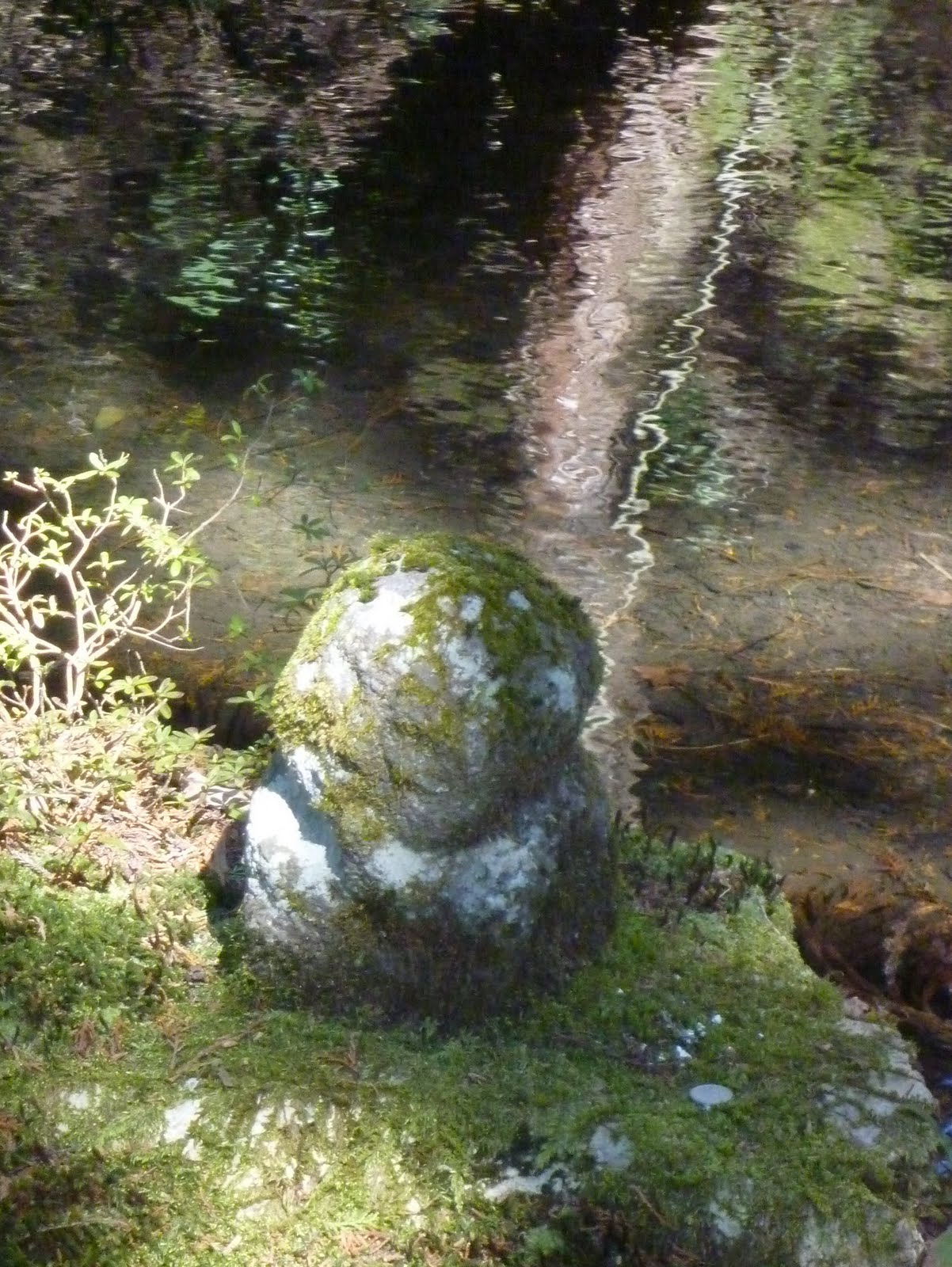
But gardens tend to be littered with cute ones here and there, like this one from Tofukuji:
And these ones from Sanzenin in Ohara:
These ones are actually from Fukuoka, on the roof of the new Hakata Station, which has a Shinto shrine dedicated to the railway. I took the photo up there while we were waiting for our bus to Kyoto:
Our Kyoto trip continues in the next post.

Related Posts:
- Kyoto the Trip! Part 1 - Tofukuji and Sanjusangendo
- Kyoto the Trip! Part 2 - Kiyomizu Temple and Maruyama Koen
- Kyoto the Trip! Part 3 - Ryoanji and Ninnaji
- Kyoto the Trip! Part 4 - Shopping Arcades by Night
- Kyoto the Trip! Part 5 - Antiquing Kyoto Style
- Kyoto the Trip! Part 7 - Ohara and the Wrath of Mount Hiei
- Kyoto the Trip! Part 8 - Kyoto Station vs. Kyoto Tower

Kyoto the Trip! Part 5 - Antiquing Kyoto Style

While we were wandering through the shopping arcades of Kyoto on the second night, we came across a shop window full of antique books and woodblock prints. This isn’t the sort of thing that excites most people, but I quite like old books – especially old Japanese books – and woodblock prints. I have a small collection of them stored somewhere in my parent’s garage back in Canada that I accumulated during my previous stay in Japan.

I really like woodblock prints. They are colorful and geared towards the masses of the time rather than wealthy art collectors. They were a source of inspiration for European impressionist painters in the 19th century, ironically at a time when they were completely going out of fashion in Japan. I never pass up a chance to look at a store that has some, though they are a hard commodity to find in Fukuoka.

So into the store we ventured.The shop was called Daishodo, located in the Teramachi shopping arcade. For an old-book lover like myself, it is an amazing place. Wall to wall books and prints meticulously decorating every square inch of the cozy 2 floor shop. The store proprietor – a congenial looking man his 50s (I guess) - sat at his little desk reading, oblivious to the presence of the customers who had just walked in.

Score one for Daishodo.

We (OK, more I) spent about an hour poring over the selection. Usually old book stores in Japan are about 95% crap and 5% good stuff (if that), but not Daishodo. Everything in the store was good stuff, all of it carefully labeled with the artist’s name and date and organized in a very pleasing way.It was intimidating as a lot of the good stuff had prices running into the thousands of dollars on them. Happily though they had a wide range of choices for even the (ahem) more economically conscious woodblock print collectors among us. And so I walked out of the store with some new possessions in tow and a lighter wallet in my pocket. Here is what I got:

Toyokuni the Third (1852)

Hirosada (1861)

Yoshiiku (1867)

Kunichika (1882)

(?) (1897)

Unknown (1771)

I was pretty happy with the haul. For 400 yen each they also had some of these:

I think these were just pictures they cut out of an old book (the date said 1771). They are actually a pretty cool and cheap piece of home decor though. They fit perfectly into 100 yen shop picture frames (which is what it is in). I picked up four of the nicer pictures and, together with the frames, the whole set only cost about 20 bucks:So next time you are in Kyoto and you happen to be a woodblock print or antique book lover, head over to Daishodo.

More pictures and stories of our Kyoto holiday in the next post.


Related Posts:
- Kyoto the Trip! Part 1 - Tofukuji and Sanjusangendo
- Kyoto the Trip! Part 2 - Kiyomizu Temple and Maruyama Koen
- Kyoto the Trip! Part 3 - Ryoanji and Ninnaji
- Kyoto the Trip! Part 4 - Shopping Arcades by Night
- Kyoto the Trip! Part 6 - Cute Buddhist Statues
- Kyoto the Trip! Part 7 - Ohara and the Wrath of Mount Hiei
- Kyoto the Trip! Part 8 - Kyoto Station vs. Kyoto Tower